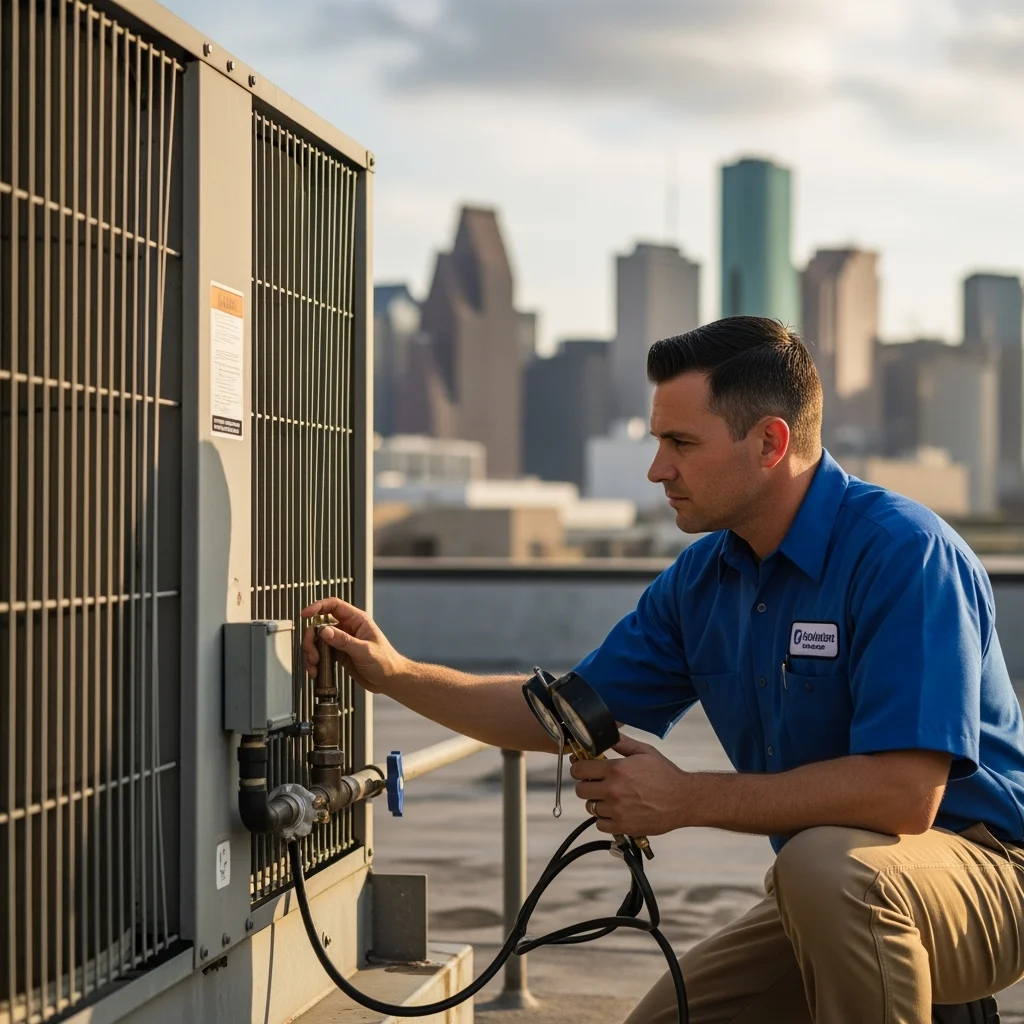
When you’re responsible for a building’s comfort and productivity, finding reliable commercial AC in Houston, TX, is one of the most important decisions you’ll make this year. I’ve worked with facility teams across the region and seen the same challenges repeatedly: equipment failing during heat waves, rising energy bills, and confusion about new refrigerant rules. If you manage a shopping center, restaurant, medical clinic, or industrial space, this guide will walk you through the real-world steps to avoid downtime, lower operating costs, and keep occupants comfortable. For local regulations and city programs that affect building systems, the city’s official site is a good place to start for permitting and incentive basics: Houston city.
Why commercial AC matters more than ever
Houston’s long cooling season and high humidity mean commercial HVAC systems work hard most of the year. When an air system is designed and maintained properly, it reduces unplanned outages, improves indoor air quality, and cuts energy costs. But when it’s undersized, overworked, or using obsolete refrigerants, performance drops quickly and repair bills climb. I want to make this simple: the right commercial AC strategy protects revenue, keeps tenants or customers happy, and extends equipment life.
Common commercial AC problems I see in the area
Across Conroe, The Woodlands, downtown Houston, and surrounding neighborhoods, a handful of recurring problems cause most service calls. Understanding these issues helps you prioritize inspections and budget for the right repairs or upgrades.
Insufficient maintenance and reactive repairs
Many businesses run systems until they fail. That leads to emergency service fees and secondary damage—moisture problems, mold, or spoiled inventory. Planned maintenance avoids those crises and smooths operating budgets.
Outdated refrigerants and regulatory shifts
Firms still using older refrigerants face supply issues and higher costs as manufacturers phase out certain gases. This affects reliability and future serviceability. Planning for compliant refrigerant transitions now avoids forced equipment retirements later.
Poor controls and lack of zoning
Single-zone, on/off controls waste energy in mixed-use buildings. Upgrading to smart controls and proper zoning improves comfort and reduces wasted runtime.
Trending topics in commercial HVAC you should watch
Two trends are reshaping commercial cooling in this region: electrification and smarter controls. Electrification moves away from on-site combustion for heating and shifts load patterns onto the electric grid. That matters because it changes demand profiles, which affects peak charges and energy strategies. Smart controls, including cloud-based building management and wireless thermostats, let you monitor equipment health and tune performance remotely, reducing service calls and improving occupant comfort.
Another trend is the refrigerant phase-down. Manufacturers and regulators are moving to lower-global-warming-potential refrigerants. That affects retrofit decisions and long-term maintenance plans. Working with a contractor who understands the phase-down schedule helps you avoid stranded assets.
How to choose the right commercial HVAC contractor
Picking a partner for commercial AC work is about more than price. I recommend a checklist approach that focuses on capabilities, responsiveness, and documented experience in this area. Ask for clear answers and examples—a professional partner will want to protect your operations and budget.
- Verify commercial experience—look for documented projects in retail, healthcare, or industrial settings.
- Confirm licensing, insurance, and safety training for site crews to reduce liability.
- Ask about manufacturer certifications for rooftop units, chillers, and commercial refrigeration.
- Request a preventative maintenance plan and emergency response timeline.
Don’t accept vague guarantees. If a contractor can show recent work in the city, references for on-call support, and a documented preventive maintenance schedule, you’re already ahead.
Maintenance plans that prevent downtime
Regular, seasonal maintenance is the cheapest insurance you can buy against a catastrophic failure. A high-quality plan focuses on early detection: refrigerant leaks, fan motor wear, coil cleanliness, and control calibration. Here’s a simple service cadence I recommend for most medium to large commercial systems:
- Quarterly inspections for filters, belts, and controls during peak seasons.
- Annual coil cleaning, refrigerant analysis, and full-system tune-up before the cooling season.
- Remote monitoring for critical sites to catch anomalies before they become failures.
- Documented service reports and seasonal checklists for compliance and insurance.
When a system is monitored, you’ll often catch small issues—like a sticking valve or a weak fan motor—long before they lead to a breakdown. For retail locations and property portfolios, remote alarms that send status updates reduce the time-to-repair and minimize tenant complaints.
Cost-saving upgrades that pay back quickly
Not every upgrade needs major capital. Small changes often deliver big savings and improve reliability.
Controls and thermostats
Switching to networked thermostats or a modern building automation system can reduce run-time and tune temperature setbacks more effectively across zones. For retail and office spaces, better controls often pay back in reduced energy bills within 18–36 months.
Variable-speed drives and high-efficiency motors
Adding variable frequency drives (VFDs) to fans and pumps allows the system to match output to demand. That saves energy and reduces mechanical stress, which lowers maintenance costs and extends equipment life.
Improved filtration and ventilation strategies
Upgrading filters and optimizing ventilation rates can improve indoor air quality while maintaining energy efficiency. In spaces with high occupant density, this has a direct impact on comfort and absenteeism.
How to budget for replacement vs. repair
Deciding whether to repair or replace comes down to three things: remaining useful life, efficiency gap, and risk to operations. If a unit is near the end of its expected lifespan, requires frequent repairs, and lags in efficiency compared with modern equipment, replacement is often the smarter long-term choice. I advise building owners to use a simple scoring system: age, current repair costs, energy consumption, and criticality to operations. If repair costs exceed roughly 25–30% of a replacement quote repeatedly, replacement should be considered.
Practical steps for an efficient retrofit project
A retrofit can be disruptive, so planning is essential. Here’s a practical sequence I recommend for small- to mid-size projects that need to stay on schedule:
- Perform a site survey and load analysis to right-size new equipment and identify distribution issues.
- Phase work by zone to avoid complete shutdowns during peak season.
- Coordinate with electrical contractors to confirm service capacity and reduce surprises.
- Schedule commissioning and post-install verification to ensure promised performance.
Commissioning is where many projects fail to deliver expected savings. A true commissioning process verifies airflow, refrigerant charge, control logic, and system sequencing under real conditions. Don’t skip it.
What to expect during emergency service calls
If a rooftop unit fails in August, response time is everything. A well-prepared contractor will provide clear SLAs: time to arrive, diagnosis window, and a plan for temporary cooling if parts are delayed. Ask about parts availability and whether the contractor stocks common components for your specific equipment models. Good communication—text updates and photos—reduces uncertainty and keeps your team informed.
Local considerations for Houston and nearby neighborhoods
Houston-area buildings face unique stresses: prolonged heat, high humidity, and occasional severe storms. In Conroe and The Woodlands, seasonal humidity can accelerate corrosion inside systems and promote coil fouling, reducing efficiency. In downtown Houston, tall buildings and mixed-use developments often require tailored ventilation strategies and redundancy to protect critical tenants such as medical practices or data centers. When planning work, consider these local factors and ask contractors about corrosion-resistant materials, enhanced drainage, and surge protection for rooftop equipment.
Simple daily checks facility managers can do
You don’t need to be an HVAC tech to spot early warning signs. I recommend these quick checks for building staff:
- Check building pressure and feel for consistent airflow at key diffusers once per shift.
- Inspect filter condition and replace if dirty—poor filters raise energy use and strain equipment.
- Listen for unusual noises during startup and runtime; report anything that sounds grinding or banging.
- Monitor energy dashboard trends weekly for spikes that indicate system inefficiency.
These small habits reduce emergency calls and give contractors a head start when they arrive.
How upgrades and maintenance affect tenant satisfaction
Comfort is directly tied to tenant retention and customer experience. When HVAC systems are reliable, complaints drop and businesses run smoother. I’ve measured scenarios where targeted upgrades—like improved zoning and better filtration—led to measurable reductions in tenant complaints and improved occupancy rates. Think of HVAC as both an operating expense and a tenant-retention tool.
Next steps for property owners and facility managers
Start with a clear assessment: schedule a professional survey and ask for a prioritized list of fixes and upgrades with cost and expected payback. Insist on seeing a timeline for work that minimizes disruption and a plan for temporary cooling during critical periods. Use the budgeting advice above and aim for a combination of quick wins and longer-term investments that reduce energy use and risk.
If you manage multiple sites, standardize equipment and controls where possible. That reduces inventory needs for spare parts and makes technical training more efficient for in-house staff.
Conclusion and call to action
Managing commercial AC in Houston, TX, is about balancing reliability, efficiency, and compliance. With the right preventive maintenance, a smart upgrade roadmap, and a contractor who understands local conditions, you can reduce outages, lower costs, and keep occupants comfortable year-round. For property managers and business owners in the Conroe and greater Houston area who want a single point of contact for commercial HVAC, refrigeration, and planned maintenance, consider contacting Nextech for a site assessment and tailored plan: Nextech.